
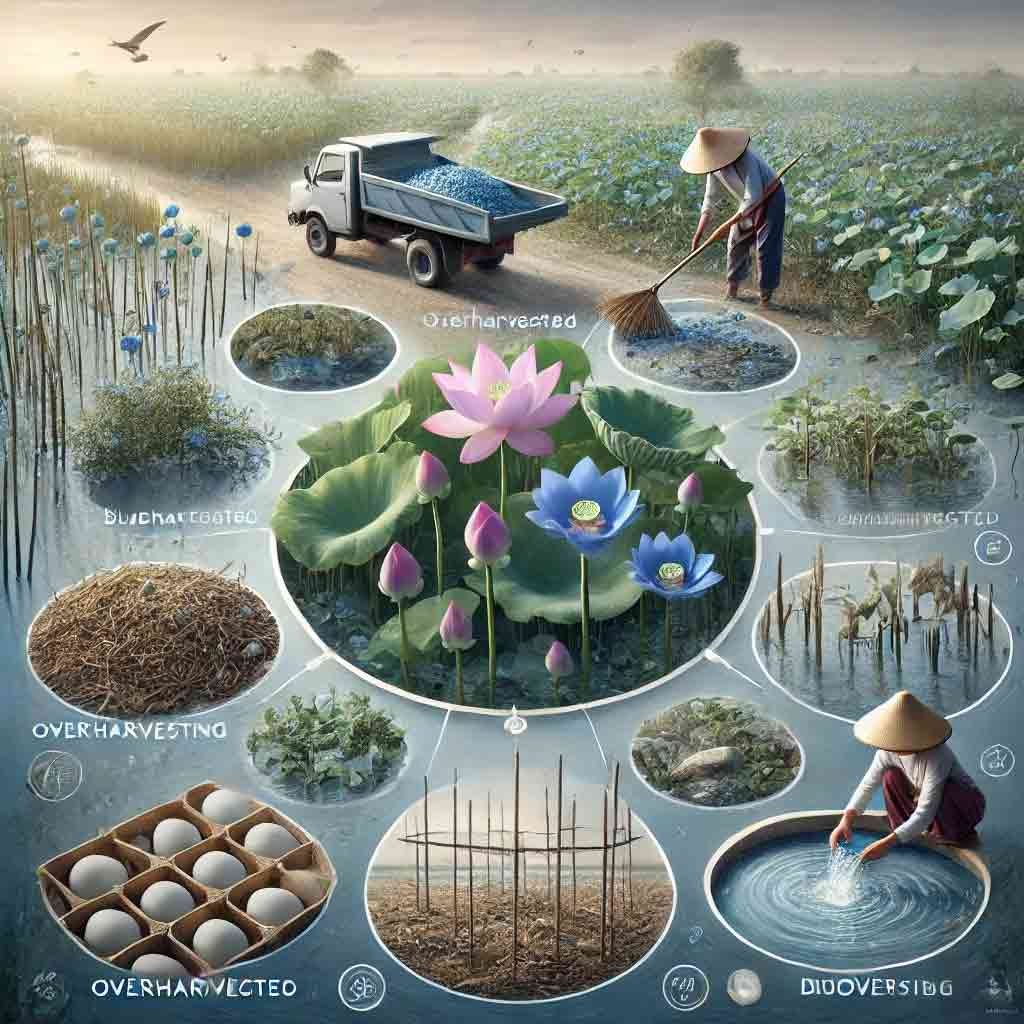
The Blue Lotus (Nymphaea caerulea) is far more than a visually striking aquatic flower. For centuries, it has held cultural, spiritual, and medicinal significance across ancient civilizations, particularly in Egypt and parts of Asia. Today, Blue Lotus is widely used in herbal teas, wellness supplements, aromatherapy products, and natural cosmetics, driving growing global demand. This surge in popularity has transformed Blue Lotus from a regional botanical treasure into a commercially valuable natural resource. However, this rapid expansion has also intensified sustainability challenges that threaten ecosystems, livelihoods, and long-term supply stability.
As international markets increasingly seek ethically sourced and sustainably harvested Blue Lotus, understanding the underlying sustainability challenges is no longer optional. It is a commercial, environmental, and reputational necessity for brands that aim to lead rather than follow.
Ecological Sensitivity of Natural Blue Lotus Habitats
Blue Lotus thrives in freshwater ecosystems, including lakes, slow-moving rivers, and wetlands. These habitats are among the most ecologically sensitive environments on the planet. Overharvesting disrupts aquatic biodiversity by destabilizing water quality, altering oxygen levels, and reducing shelter for fish, insects, and microorganisms. When harvesting is unregulated, entire plant populations can be depleted faster than they naturally regenerate.
The ecological impact extends beyond the flower itself. Roots and rhizomes play a critical role in sediment stabilization and nutrient cycling. Excessive removal weakens these systems, leading to erosion, algal blooms, and long-term habitat degradation. Once damaged, aquatic ecosystems can take decades to recover, if recovery is possible at all.
Overharvesting Driven by Global Demand
The modern wellness industry has fueled unprecedented demand for Blue Lotus extracts, dried petals, and infused products. This demand often outpaces natural regeneration cycles, especially in regions where Blue Lotus is harvested from wild populations rather than cultivated sources. Without enforced quotas or seasonal restrictions, harvesters may prioritize short-term income over long-term viability.
Overharvesting also creates a boom-and-bust cycle, where initial profits collapse as supplies diminish. This instability affects both exporters and local communities who rely on Blue Lotus as a primary income source. Sustainable harvesting practices are essential to prevent market volatility and irreversible ecological loss.
Water Pollution and Environmental Degradation
Freshwater ecosystems worldwide are under pressure from industrial runoff, agricultural chemicals, and urban wastewater. Blue Lotus plants are particularly vulnerable to water pollution, as they absorb contaminants directly from their environment. Polluted waters reduce plant vitality, lower active compound concentrations, and increase the risk of contaminated end products entering global supply chains.
From a sustainability perspective, pollution not only threatens plant survival but also undermines consumer trust. Brands that fail to address water quality risks face reputational damage and regulatory scrutiny, especially in markets with strict safety standards for herbal and wellness products.
Climate Change and Hydrological Instability
Climate change has introduced new challenges to Blue Lotus sustainability. Altered rainfall patterns, prolonged droughts, and rising temperatures disrupt freshwater ecosystems where Blue Lotus naturally grows. Reduced water levels expose plants to heat stress, while sudden flooding can wash away entire colonies.
These climate-driven fluctuations make traditional harvesting calendars unreliable. Sustainable operations must adapt by investing in climate-resilient cultivation methods, water management systems, and diversified sourcing strategies to ensure long-term supply continuity.
Lack of Standardized Harvesting Practices
One of the most critical sustainability challenges in Blue Lotus harvesting is the absence of universally accepted standards. In many producing regions, harvesting techniques are passed down informally, without scientific guidance or ecological oversight. This results in inconsistent quality, unpredictable yields, and increased environmental harm.
Sustainable harvesting requires precise timing, selective picking, and protection of root systems. Without training and accountability, even well-intentioned harvesters may unintentionally damage future growth cycles. Establishing standardized best practices is essential for aligning ecological preservation with commercial success.
Socioeconomic Pressures on Local Communities
Blue Lotus harvesting often supports rural and economically vulnerable communities. While global demand can provide valuable income, it can also create dependency on a single resource. When prices fluctuate or supplies decline, these communities face significant financial risk.
Fair-trade principles and community-based resource management are vital components of sustainability. When local harvesters are empowered through education, equitable compensation, and long-term partnerships, they become active stewards of the ecosystems they depend on rather than passive extractors.
Challenges in Cultivation Versus Wild Harvesting
Cultivated Blue Lotus offers a promising solution to many sustainability issues, but it is not without challenges. Controlled cultivation requires significant investment in water infrastructure, land management, and botanical expertise. Additionally, cultivated plants may differ in chemical composition if growing conditions are not carefully optimized.
Despite these hurdles, cultivation reduces pressure on wild populations and enables traceability, quality control, and year-round supply. For brands committed to sustainability leadership, supporting cultivation initiatives represents a strategic investment rather than an operational cost.
Supply Chain Transparency and Traceability
Sustainability does not end at harvesting. Complex global supply chains often obscure the origin of Blue Lotus products, making it difficult to verify ethical and environmental standards. Lack of transparency increases the risk of illegal harvesting, labor exploitation, and mislabeling.
Implementing traceable sourcing systems, third-party audits, and transparent documentation strengthens both sustainability outcomes and brand credibility. In competitive markets, transparency is a differentiator that builds long-term consumer trust.
Regulatory Gaps and Enforcement Challenges
In many producing regions, environmental regulations exist but are weakly enforced due to limited resources or competing economic priorities. This regulatory gap allows unsustainable practices to persist unchecked. International buyers who ignore these realities may inadvertently contribute to environmental harm.
Proactive engagement with regulators, NGOs, and conservation groups can help bridge enforcement gaps. Collaborative governance models align economic incentives with environmental protection, creating a more resilient Blue Lotus industry.
The Role of Innovation in Sustainable Harvesting
Technological innovation plays a growing role in addressing sustainability challenges. Remote sensing, water quality monitoring, and data-driven harvest planning enable more precise resource management. These tools help balance yield optimization with ecological preservation.
Innovation also extends to product development. By maximizing extract efficiency and reducing waste, brands can lower overall harvesting pressure while maintaining profitability. Sustainability, when approached strategically, becomes a driver of innovation rather than a constraint.
Building a Future-Proof Blue Lotus Industry
The sustainability challenges in Blue Lotus harvesting are complex but solvable. Success depends on integrating ecological science, ethical sourcing, community engagement, and commercial strategy into a unified approach. Brands that invest in sustainability today position themselves as industry leaders tomorrow.
By prioritizing responsible harvesting, transparent supply chains, and long-term ecosystem health, the Blue Lotus industry can meet global demand without compromising the natural systems that make this remarkable plant possible. True sustainability is not a marketing claim; it is a competitive advantage that ensures resilience, credibility, and lasting growth in an increasingly conscious global market.
Frequently Asked Questions (FAQs)
What makes Blue Lotus harvesting unsustainable in many regions today?
Blue Lotus harvesting becomes unsustainable when wild populations are collected without seasonal limits, regeneration planning, or habitat protection. Rising global demand often encourages overharvesting, which disrupts freshwater ecosystems, reduces plant regeneration, and threatens long-term availability. The absence of standardized harvesting practices further accelerates ecological damage.
How does Blue Lotus harvesting impact freshwater ecosystems?
Freshwater ecosystems are highly delicate, and Blue Lotus plays an important role in maintaining water balance and biodiversity. Unsustainable harvesting can destabilize sediment, reduce oxygen levels, and disrupt habitats for fish and microorganisms. Over time, this leads to water quality degradation and long-term ecological imbalance.
Is cultivated Blue Lotus more sustainable than wild-harvested Blue Lotus?
Cultivated Blue Lotus is generally more sustainable because it reduces pressure on wild populations and allows better control over growing conditions, quality, and yield. While cultivation requires investment and expertise, it supports traceability, consistent supply, and environmental protection, making it a preferred option for long-term sustainability.
How does climate change affect Blue Lotus sustainability?
Climate change alters rainfall patterns, water levels, and temperatures, all of which directly affect Blue Lotus growth. Droughts can shrink freshwater habitats, while flooding can destroy plant colonies. These unpredictable conditions make sustainable harvesting more challenging and increase the need for climate-resilient cultivation and water management strategies.
Why is supply chain transparency important for sustainable Blue Lotus products?
Supply chain transparency ensures that Blue Lotus is harvested ethically, legally, and with minimal environmental impact. Transparent sourcing helps prevent illegal harvesting, supports fair compensation for local communities, and builds consumer trust. For brands, it also reduces regulatory risks and strengthens long-term market credibility.